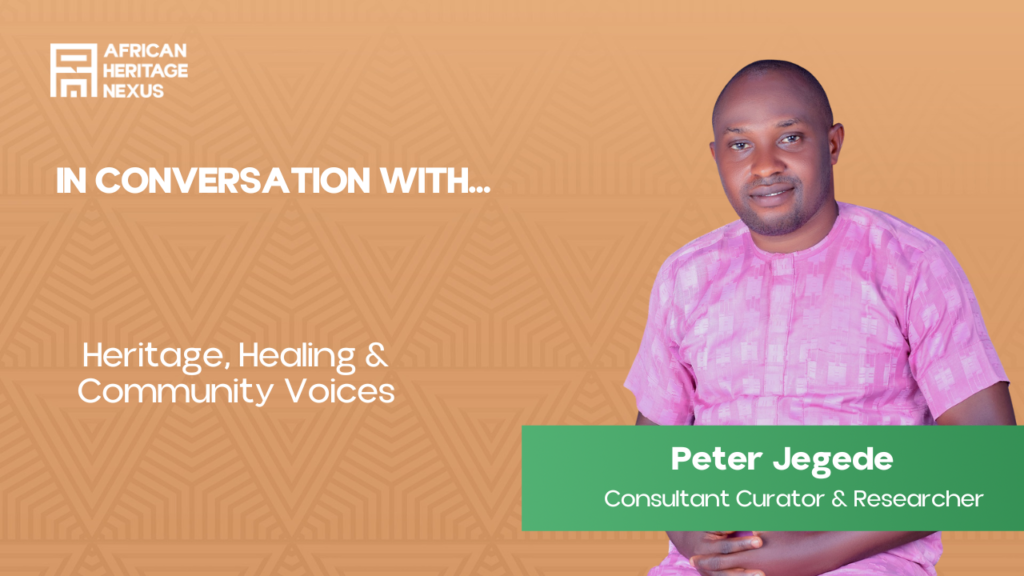


In this episode of the African Heritage Nexus (AHN) Podcast, we speak with Peter Jegede, a Nigerian curator and researcher whose work spans research, archeology, restitution, exhibitions, and geoarchaeology. Peter shares his unusual journey from industrial chemistry into the world of museums, beginning with his role at the Olusegun Obasanjo Presidential Library (OOPL). He reflects on how his scientific background informs conservation and preservation practices in heritage spaces.
Drawing from his work across Nigerian heritage institutions and international research collaborations, he speaks to the responsibilities of curators working at the intersection of memory, power, and community knowledge.
One of the central themes of the conversation is restitution—not simply as the return of objects, but as an ethical process that must engage communities, acknowledge harm, and restore dignity. He highlights the disconnect between official restitution processes and community knowledge, offering critical insights into the local complexities often overlooked in global restitution debates. He stresses the importance of ethical restitution—where communities are not just recipients, but active participants in the process.
We also explore curating as a space for truth, dialogue, and care, and the importance of translating academic research into accessible public heritage spaces. Through exhibitions and storytelling, Peter demonstrates how museums can balance national narratives with community voices, allowing multiple histories to exist side by side.
Looking ahead, Peter shares insights from his pioneering PhD in Geoarchaeology, emphasizing how soil, sediments, and chemical signatures can help reconstruct ancient human activity. He closes with a call for younger practitioners to pursue heritage with passion, persistence, and inclusivity, while reminding us that museums must become spaces of dialogue, healing, and empowerment—not silence.
This episode will be particularly relevant to practitioners working in museums and exhibitions, researchers, policymakers, and anyone interested in community-centred approaches to restitution and cultural heritage.